
Editor’s Choice
Ramesh Aroli
Translated by Prof. H.S. Shivaprakash
Someday…
Some day when
Common flies rest on my lids
When the crow sitting on the electricity pole
the pole resting on the ground
In the front yard
Thanks to torrential rain,
Making crow turn towards you
When the ants which have taken off wings
Queue up to go to the chimney
In the house next doors
Teach our children not to think that
Walking barefoot is not a shame;
Thanks to the compassion
That gave us the blessings of feet
Teach them not to wait barefooted
Tell them the secret
Of how the debt to those
Whose in spite of skin scrached till it bled
From the iron fence
Of the compound in some town
still made sandals for them
If possible teach them
That the bottle is not the birthplace of water!
Teach them,the patience
To wait
For a coin in the temple collection box
To reach the sky
When it is thrown
To the courtyard of stars;
The loneliness to deserve love;
To hold out the palms of the hand
To collect the earnings
Or melting shadows…
Inform them;
if some god is born
To whom ants can surrender their heads
Before the plough, bullock cart and the tyre,
Travels in the road,
The wind that throws sand into the eyes
The onslaught on the tombs
Of those who danced only to disappear
Is the conspiracy of the descendants
Of that god!
And that we are the result of all that!
—————
The slate in the nation’s hand!
On the streets of the city
Were cracks in the wall
Are packed with colour full papers
The boys twirling their moustache
In the mirrors of strangers; cars
And click a selfie with the mobile in the left-hand
I wonder,
Her black and white photo in hand
On the day this is certified as love
I should have asked your father
If I could do what I did
But what is the point in begging you
O mother of your children
In front of their father!
You are a ration card below
My sins’ pillow
An orphaned brown tilak
Sticking to the mirror of a hotel room
Of a certain number
Give a name to this vice sleeping in the dream
If children are born out of it
The world will give them a name anyway!
Whom should I love tonight?
The one with long and painted-nails
Or the one who has clipped them fearing dirt
O god! You have exercised your smartness
Even in my desires!
Listen! You brought somebody who never voted
On the poll day; prepared an original voters Id
Drowned him in adulterated boos
He is the one who sold his vote to you
Promulgated the tom tom boys the next day
Just forget it, how does it matter for somebody
Who has placed a slate in the hands of nation
TV channels and newspapers sang your praises
O friend of Dalits and the downtrodden
All votes to him
To this saviour of nation
The promise was made when courts were snoring
In the name of house-hold gods
On the witness of gifts bestowed !
When the ancestors with lips painted in the posters
Guffaw at me
I remove the Id from my neck
And throw it up the skies
I keep on wondering
Towards the corridor, a town, a park, or a station
Hoping that somebody else may bring my girl to me
So that promises can be made
***
Well, this is enough for these bad times!
On the first day of the solar year
In the old buzzing bazar of the half-blind
At least these two squint eyes have met
Well, this is enough for these bad times!
In this brittle spring
When even the cow dung has fixed price
In the secluded lane
Where the fly refuses to listen to the story
Of the cattle in the fold
At least these two deaf people are listening to each other
Well, this is enough for these bad times!
In this year which roared
Give me a raki O brother
Give a marriage string O husband
At least two parrots are twittering
Well, this is enough for these bad times!
In reply
To ad companies’ happy new year
In the mist of the gossip of the delighted
At least the leaves are waving
Watching the gestures of two deaf people
Well, this is enough for these bad times!
Reading to the command
Don’t fall in love according to the almanac
My eyes turned stone-blind
Listening to the sobs
At least two stray-dogs started licking my feet
Well, this is enough for these bad times!
In this critical season
When festivals are reduced to roaring mikes
At the village-court
In between disputes over centimetre of land
At least the ball that the boy through up
The sky returned to him
Well, this is enough for these bad times!
The ants never asked
For the alms of grains of rice
Look, amidst those feeding ants on sugar
One that never soldied anything
Got the support of two soldiers
Well, this is enough for these bad times!
In this town
Whose roars are decorated
With the festoons of fresh leaves
Inside the tents echoing with protesting voices
At least two fingers are coming together
Well, this is enough for these bad times!
On the new year’s day
Of the sugarcane and neem-leaves
When streets of full of beggers
And lanes of, alms-givers
At least a chicken egg was hatched
Well, this is enough for these bad times!
***
Condolences to You, O Almighty
Translated by Prof. Kamalakar Bhat
O Lord, I swear upon our pledges,
as we descend the stairs of a downward index,
clutching an incense stick in one hand and a matchstick in the other,
waiting for the grain rightfully ours,
you seize the wind itself— for that, we salute you!
When the dust from a galloping white horse
appears miraculously in our bowls like balls of ash,
you arrive like the costly onion in the marketplace.
To those unfortunate souls who fail to recognize you,
you leave behind a warning: “Do not spit here.”
For that, O Lord, we offer our deepest prostrations!
Naming our great-grandchildren after you,
we cast seeds into the earth,
watching intently for the first tender sprout.
Yet, as those who peddle false seeds in broad daylight feast on bribes,
in the guise of a hen, you stomach the fragile shoots—
to that divine incarnation of yours, we offer our boundless reverence!
O Master, when the sky blooms with festival lights,
and tongues are torn apart for failing to invoke your name,
when the wages of your enforcers are no longer a secret,
when a woman who dares to drag before the courts
those whose nails were driven into wombs
is silenced beneath the wheels of a speeding truck,
we bow before the benevolent one—
who grants them bail and strolls free without a care!
As we toil over our fields, turning the soil,
pamphlets are thrust into our hands, summoning us to church,
urging us to pray for a good harvest—may God bless them.
And when starving cranes peck at the barren earth,
you embrace those who believe our plows must not yawn,
welcoming them into your divine abode—
for that, we offer our salaams!
O Father, before old men, weary of waiting, exhaust their last reserves,
leaving behind letters addressed to the one without an address,
come, join us for a fast—just once!
For what remains unresolved are not mere love scandals,
but the silenced breaths of those turned to corpses,
rising as hymns in your praise—
for that, we offer our deepest condolences!
**
A Cat’s Prayer at the Dargah…
-1-
O Merciful One, O Auliya,
as the call to prayer echoes,
the gnawing hunger within me wails too.
My paws carry me toward the offering bowls—
amid the sacred day’s chaos,
protect my tail from careless feet!
Do not drive me away, O Lord,
for lacking a scarf on my head or kohl in my eyes,
grant me a humble spot beneath the wall
behind your blessed tomb.
Let the outcasts, who know not their fathers,
inscribe your name in the visitor’s register.
Set aside a melody from the harmonium,
played in your honor,
for the unborn quivering within me.
You, who grant life unasked,
show mercy to those who beg for it!
Let a loose thread from your rose-scented shroud
fall this way—
a blind infant needs a talisman.
Among those who indulge in stripping,
begging for a shred of cloth may well be forbidden!
O Master,
let the smoothness of the marble path
laid in your honor touch my tiny heart.
And when my fur, heavy with sin,
sheds beneath the amethyst dome of your shrine,
do not let your breath from within the tomb reach me.
And if you truly grant wishes,
melt the gold-plated doors of your sanctuary—
reach out to the hungry mouths gathered outside,
offering them a piece of bread.
Then I shall return—
to the wind, to the water, to the earth.
Grant me sleep, so I may close my eyes.
-2-
When sleep grows weary on distant journeys,
grant me the chance to piece together
fragments of a torn sky.
Stop the blood spilled for shapes on maps
from staining the flight of kites!
In an age where water is hoarded in bottles
while thirst is rationed among the poor,
turn me into a lizard, or a camel—
so that when I cross the desert,
I may return once more
to kneel beside your tomb in reverence.
O Master,
when metal birds in the sky
breathe fireballs upon the earth,
when swarms of flies
kiss the blood below,
see to it that my hunger
leaves no debt upon the palm felled by an attack.
Yes, Lord,
I am but a she-cat,
and I know well—
here, as we exit and enter,
men take attendance,
keeping count of those they wed
and those they keep,
ensuring the tally never fails!
Hence, I cannot enter,
and you may not step out.
What need have those unafraid of death for you?
Let there be mercy, O Saint.
So long.
My salaam to you!
**
O Sun-Swallowing Black Ant…
I never knew
a sacred sin could take such a shape—
not until I saw you, Umar!
I never knew
that a morsel from a mother’s hand
could taste of tears—
not until I chewed it, Umar!
You are a sun-swallowing black ant.
They dragged you to the prison,
accusing you of stealing darkness.
I never knew
that every season could hurl dried leaves
and deceive—
not until the wind began to blow, Umar!
That beard, those unkempt curls,
the loose jubba you wear—
how they are being told to trim, to fit, to fade…!
I never knew
that even beyond iron chains,
a human world could exist—
not until I met your gaze, Umar!
When even the wind acts as the master of a mouse,
even breathing becomes an act of rebellion.
I never knew
that new shoots spring forth
from the very place of the cut—
not until fingers touched the remaining roots, Umar!
In the alleyways, a cat
hands out colored pamphlets—
“Even mice have rights,” it proclaims in Amen’s name.
I never knew
that poisonous speeches could be discounted—
not until I heard the weight of your words, Umar!
**
Dr. Ramesh Aroli
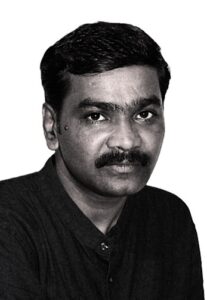
Is a Kannada poet and he has to his credit three collections of poetry-(Eleya Paapada Hesaru, -2010, Julume 2014 and Bidu Saku E Kedugaalakkishtu – 2021). His narrative poems have received critical acclaim for their fresh poetic idiom and style.
Tabloid Journalism (In Kannada), Madhubala: Belli Terege Kaala Bareda kaagada (biography of Hindi filmstar Madhubala in Kannada), Mooknayak (translation of Editorials by Dr.B.R Ambedkar into Kannada), Maidanam (translation of Gudipati Chalam’s novel Maidaanam into Kannada) Bandayada Bolabandeppa, (biography of a dalit activist from Raichur, Karnataka) Some of his poems have been translated into Hindi, English, Telugu and Spanish languages. For doctoral study he worked on Kannada tabloid Lankesh Patrike and received his degree from Centre for Media Studies, JNU, New Delhi.
He has received Kannada Book Authority prize, Dr. G.S. Shivarudrappa Kaavya Prashasti,
Pu.Ti. Na Poetry-Drama Award , Sanchaya Kaavya Prashasti, Prajavani Deepavali poetry prize and Sankramana Kaavya Prashasti for individual poems. He is recipient of ‘Prajavani Drama Award’-2025. At present he teaches Journalism at Kamala Nehru College, University of Delhi.
Prof. H.S. Shivaprakash
Bio-note of translator:
Prof. H.S. Shivaprakash is a poet and playwright who is considered one of the most influential voices in 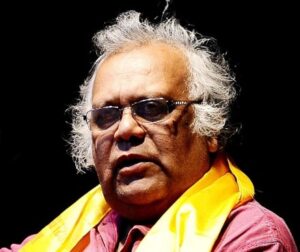 Kannada literature today. Prof. Shivaprakash is the recipient of the Sahitya Akademi Award and the Sangeet Natak Akademi Award, he has also received the highest awards in Karnataka for literature and drama. His literary works have been translated into most Indian languages, as well as into English, French, German, Italian and Spanish. A significant scholarly contribution is the rediscovery of the aesthetic facets of Indian Bhakti traditions. His plays are widely staged in Karnataka and other parts of India. The former editor of the Sahitya Akademi journal, Indian Literature.
Prof. Kamalakar Bhat
Bio-note of translator:
Prof. Kamalakar Bhat is a professor and head of the postgraduate department of English of Ahmednagar College, Ahmednagar, Maharashtra. He is an award-winning bilingual writer, a columnist and a translator between English, Hindi, Marathi and Kannada. He has three collections of poems and three collections of translated verse in Kannada. He has edited three books in English. His essays and translations have appeared in Outlook magazine, Scroll.in, Wire.in, Muse India, Indian Literature, kitaab.org, indianculturalforum.com, The Bombay Literary Magazine and bengalurureview.com.